Industry Insights

Industry Insights

Nearshoring vs Offshore Manufacturing: What It Means for Ocean Freight Demand

Global supply chains are evolving. Over the past few years, geopolitical tensions, rising freight costs, port congestion, and supply chain disruptions have forced businesses to rethink where and how they manufacture. Two strategies are now shaping boardroom discussions worldwide: Nearshoring Offshore manufacturing But what does this shift actually mean for ocean freight demand, particularly for trade lanes connected to Australia? Let’s break it down! The Shift: Why Companies Are Reconsidering Offshore Manufacturing For decades, offshore manufacturing, particularly in Asia, dominated global production strategies. Lower labor costs, established industrial ecosystems, and …
Industry Insights

Blank Sailings & Capacity Cuts: Why Ocean Freight Schedules Are Less Predictable

In global shipping, reliability has always been critical for businesses managing international supply chains. Yet in recent years, many importers and exporters have noticed a growing challenge: ocean freight schedules are becoming less predictable. Two key factors behind this shift are blank sailings and capacity cuts. Understanding how they work and how they affect your shipments can help businesses better manage risk and maintain supply chain stability. What Are Blank Sailings? A blank sailing occurs when a shipping line cancels a scheduled voyage or skips a port call along a …
Logistics Demand vs Infrastructure Reality: Where the Bottlenecks Will Be in 2026–2030Industry Insights

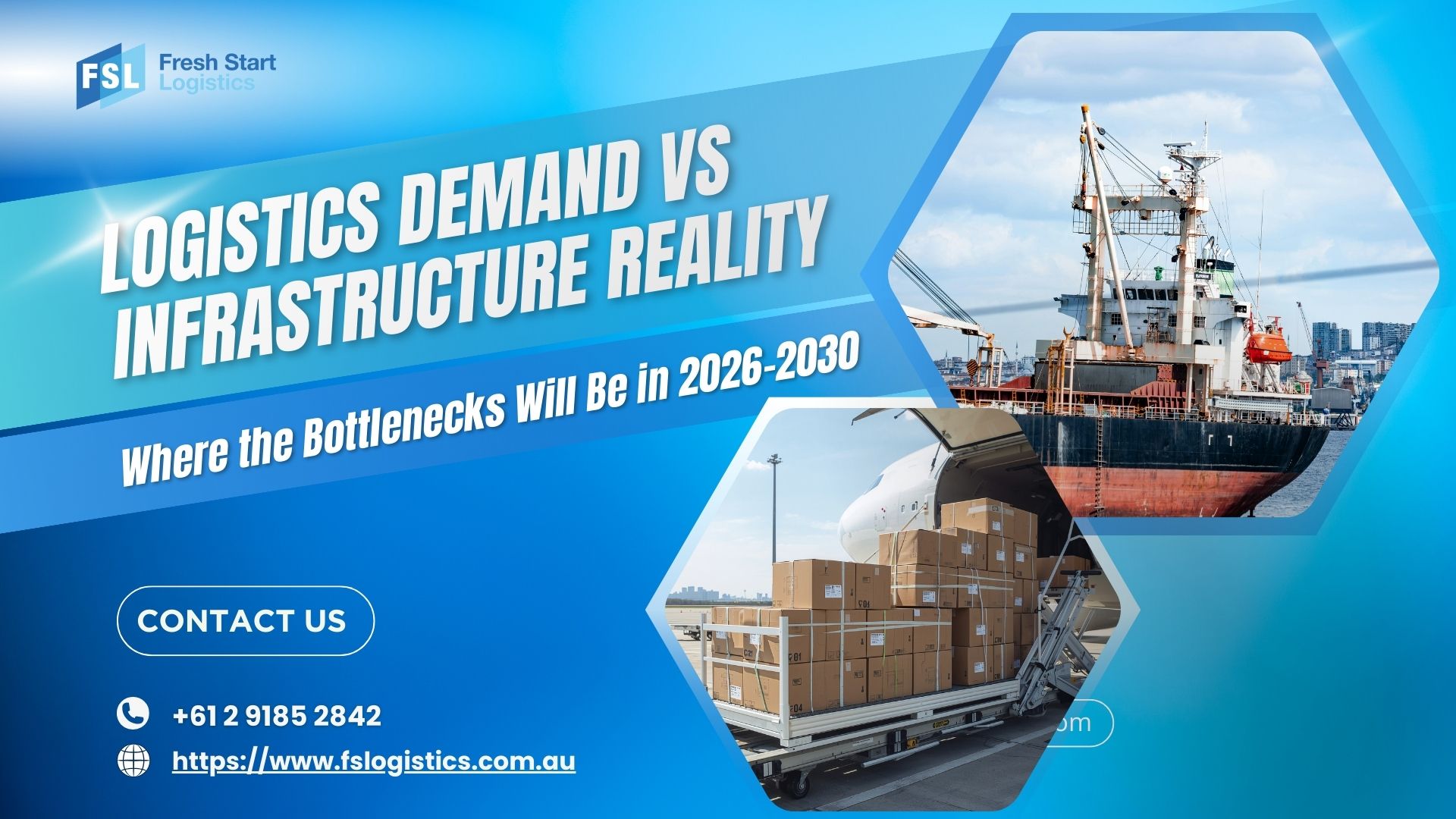
Logistics Demand vs Infrastructure Reality: Where the Bottlenecks Will Be in 2026–2030

Global and regional logistics demand is accelerating. E-commerce continues to reshape delivery expectations. Manufacturing footprints are expanding and shifting. Trade volumes are growing across Asia-Pacific corridors. On paper, freight demand projections look strong through 2030. But beneath that growth lies a growing disconnect. Logistics demand is scaling faster than infrastructure can realistically keep up. Between 2026 and 2030, the most significant risks to supply chain performance won’t come from demand shocks, but from structural bottlenecks across ports, roads, rail networks, and last-mile delivery systems. Here’s where the pressure will be …
The Invisible Risks in Logistics: Why “Almost Happened” Matters More Than You ThinkIndustry Insights

The Invisible Risks in Logistics: Why “Almost Happened” Matters More Than You Think

In logistics, risk is often misunderstood. When businesses think about supply chain risk, they picture major disruptions, port strikes, extreme weather, geopolitical shocks. While those events make headlines, they are not what most commonly threaten business continuity. The real risk usually comes from what almost happened. A missed cutoff that was barely recovered. A delayed handover that didn’t escalate this time. A documentation error caught at the last moment Risk rarely announces itself Most logistics disruptions don’t start with a single failure. They build quietly through incremental friction: Minor schedule …
Industry Insights

How Australian Businesses Can Build Resilient Supply Chains in 2026

The past few years have proven one thing clearly: supply chains must be resilient, not just efficient. As we move into 2026, Australian businesses face a complex logistics environment shaped by global uncertainty, rising costs, infrastructure pressure, and changing customer expectations. Building a resilient supply chain is no longer optional — it’s a strategic advantage. What Supply Chains Resilience Means in 2026 In 2026, resilience goes beyond having a backup supplier. It means: The ability to adapt quickly to disruption Maintaining service levels during volatility Protecting cash flow and customer …
Industry Insights

Top 3 Myths About Freight Pricing — Debunked

Freight pricing often feels like a mystery — fluctuating rates, unexpected surcharges, and complex logistics terms can make it hard to know what you’re really paying for. At Fresh Start Logistics, transparency and trust are at the heart of how we do business. So today, we’re breaking down three common myths about freight pricing — and revealing what really drives logistics costs. Myth 1: “Freight costs are all about distance.” It’s easy to assume that the farther your shipment travels, the more it costs. While distance plays a role, it’s …
Industry Insights

How Fresh Start Logistics Helps You Win in Key Asian Markets?

Cross-Border Shipping to Asia: What Australian Businesses Need to Know in 2026 As Australia’s trade relationships across Asia deepen, 2026 is set to become a critical year for exporters and importers alike. With rising consumer demand, evolving customs frameworks, and growing competition across trade lanes, businesses that understand the coming shifts will have a major advantage. For Australian SMEs looking to expand, Asia remains the most dynamic and accessible market – from Vietnam and Singapore to China, Japan, and South Korea. But success requires more than just good products; it …
go top